
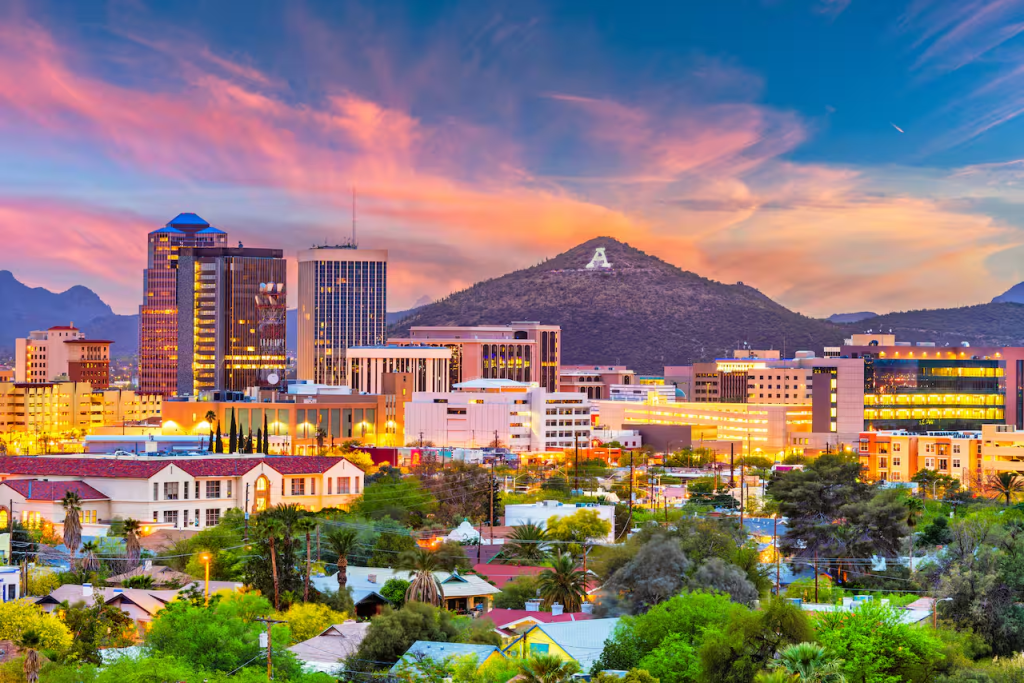
The year-end holiday window provides a rare chance to unplug and take a meaningful break, but it often comes with a steep price: packed airports, overcrowded ski slopes, and overrun tropical beaches. When travelers head to the same popular hotspots such as Caribbean mega-resorts, well-known European Christmas markets, or major alpine resorts, the getaway can quickly feel more exhausting than staying home. Not necessarily a criticism, just a consideration!
Choosing a smarter winter break means thinking strategically about seasonal shifts and regional travel flows. Across the globe, remarkable destinations offer prime seasonal conditions right now while bypassing the holiday bottleneck entirely. Whether you’re chasing summer sun down south or looking for crisp Mediterranean tranquility, these five global destinations allow you to trade commercial crowds for more peaceful immersion.
1. Tucson and Saguaro National Park, Arizona, USA
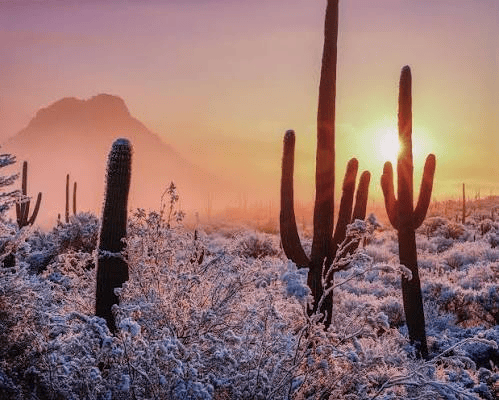
While cold-weather travelers across North America routinely overwhelm the resort corridors of Scottsdale, Phoenix, and Palm Springs, Tucson delivers an authentic desert landscape with substantially less congestion and a richer cultural identity.
- Why the Location is Known for Winter: Tucson enjoys optimal winter weather, with daytime temperatures hovering comfortably between 65°F and 72°F under clear skies. This mild climate transforms the rugged Sonoran Desert into an outdoor playground, completely free from the scorching heat of summer. Winter is also the prime window to experience the rare visual phenomenon of light snowfall dusting the upper ridges of the Santa Catalina Mountains while the giant saguaro cacti below bask in warm afternoon sunshine (photo above).
- What to Do While You’re There: Spend mornings hiking through the towering stands of giant cacti in Saguaro National Park East and West, or explore the rugged trails of Sabino Canyon. Drive up the Mount Lemmon Scenic Byway to transition through distinct biological zones, take in the Arizona-Sonora Desert Museum open-air botanical exhibits, and immerse yourself in Tucson’s recognized UNESCO City of Gastronomy dining scene, sampling Sonoran hot dogs and heritage regional Mexican fare.
- Keep in Mind… Desert temperatures drop rapidly the moment the sun slips behind the mountains. While daytime hiking requires light layers and sun protection, evenings frequently dip into the 30s and 40s, requiring warm outerwear.
2. The Peloponnese, Greece
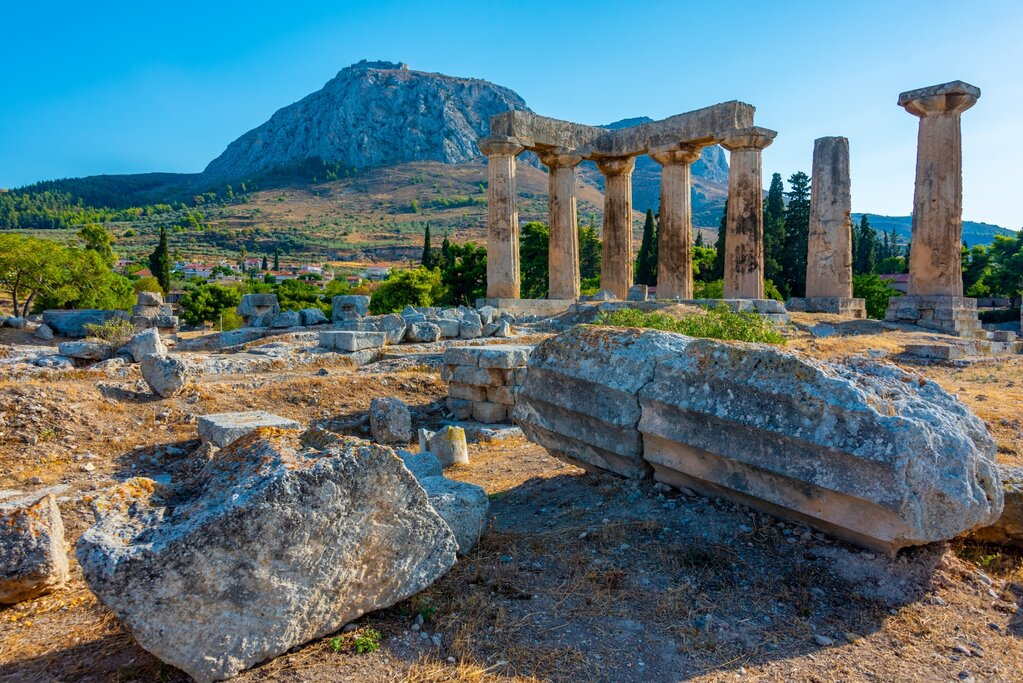
Summer visitors pack Greece’s islands to maximum capacity, but the mainland Peloponnese peninsula in winter returns to a peaceful, authentic agrarian rhythm. With ancient citadels framed by snow-dusted mountains, this historic region reveals its classic character without the tour bus crowds.
- Why the Location is Known for Winter: The Peloponnese experiences a mild Mediterranean winter, with coastal daytime temperatures averaging around 55°F to 60°F. While the Aegean beach resorts shut down, the Peloponnese remains fully active with local life. The cooler winter air creates ideal conditions for exploring expansive archaeological complexes that are uncomfortably hot during the summer months, while the surrounding Taygetos mountain peaks often wear dramatic caps of white snow.
- What to Do While You’re There: Walk through UNESCO World Heritage sites like Epidaurus, the fortified citadel of Mycenae, and ancient Olympia with virtually no other visitors in sight. Make the romantic coastal town of Nafplio your base, wandering its Venetian marble alleys and climbing the stone steps of the Palamidi Fortress. Inland, drive through the rugged mountain villages of Arcadia, where traditional stone tavernas serve hearty winter stews beside roaring wood fireplaces.
- Keep in Mind… Archaeological sites and museums operate on reduced winter schedules, typically closing around 3:00 PM or 5:00 PM. You’ll want to plan morning visits to major historical sites and secure a reliable rental car to navigate the winding mountain passes.
3. The Lake District (Bariloche), Argentina
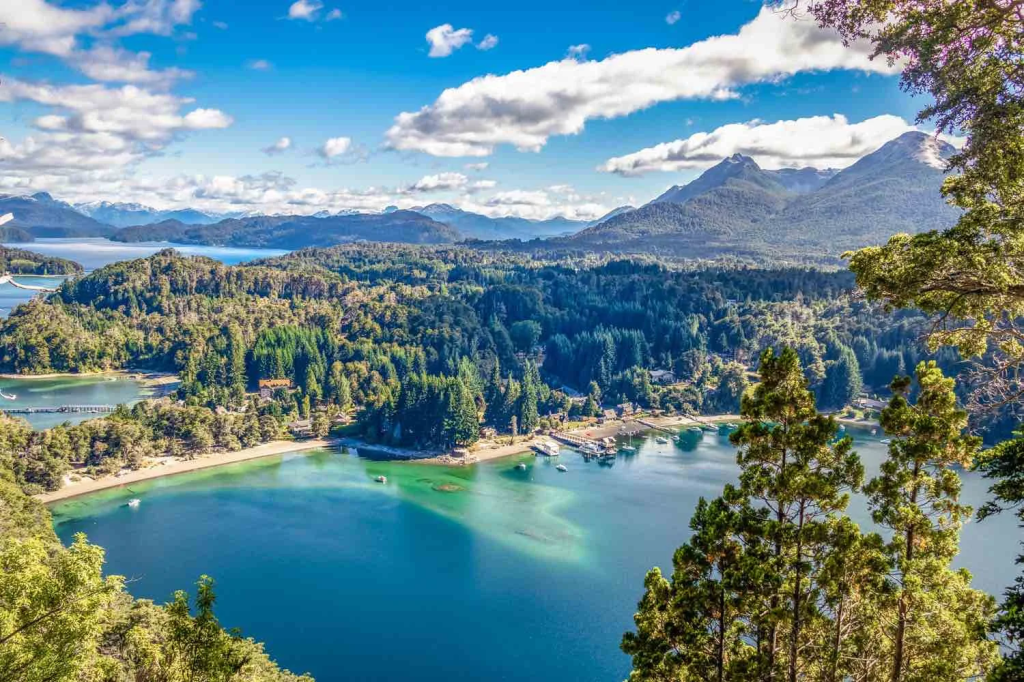
By trading hemispheres during winter break, you step straight into early summer. While international hikers in Patagonia bottleneck along the famous multi-day circuits of Torres del Paine or Mount Fitz Roy, the northern Argentine Lake District provides immense open space and relaxed alpine recreation.
- Why the Location is Known for Winter: Late December and early January represent the start of the Southern Hemisphere summer. The region around San Carlos de Bariloche and Villa La Angostura features long daylight hours extending past 9:00 PM, comfortable temperatures in the low to mid-70s, and hillside lupines blooming in dense clusters of purple and blue along glacial lakeshores.
- What to Do While You’re There: Drive the world-renowned Route of the Seven Lakes (Ruta de los Siete Lagos), stopping at hidden beaches and scenic lookouts across Nahuel Huapi and Correntoso lakes. Hike the panoramic trails of Cerro Campanario and Cerro Llao Llao, kayak through calm glacial bays, and indulge in Bariloche’s famous artisan chocolate shops and wood-fired Patagonian lamb grills.
- Keep in Mind… The Andean summer brings high UV exposure and dry mountain breezes. Sun protection is mandatory, and despite warm daytime temperatures, alpine evenings cool off quickly. Because this is the start of the domestic vacation window in South America, reserving private lakefront villas or boutique estancias early is essential.
4. The Drakensberg, South Africa
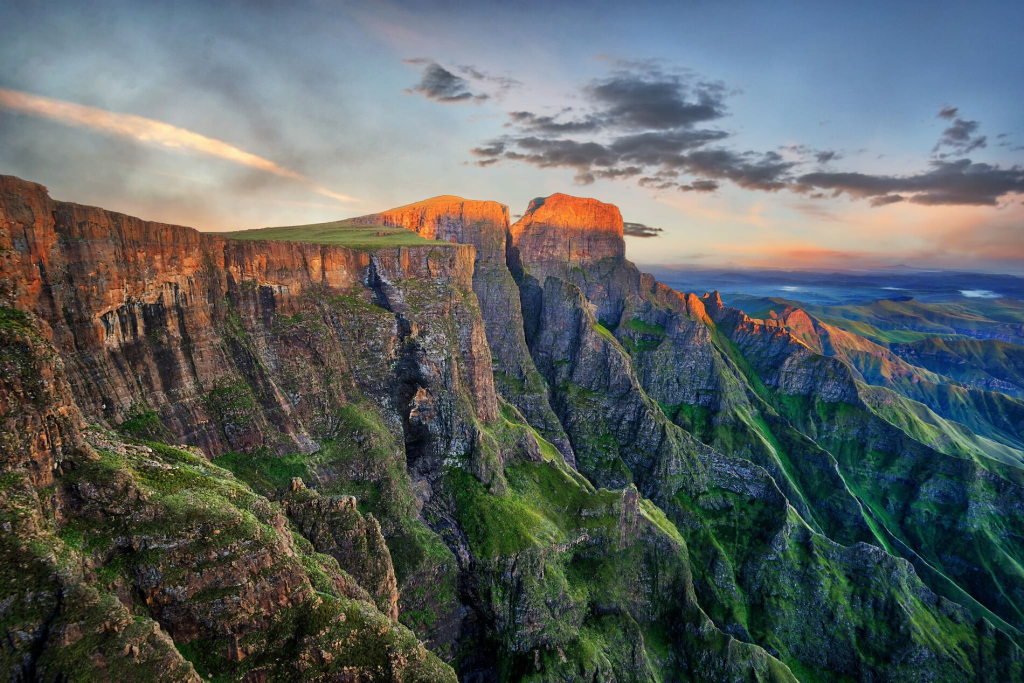
Most international travelers to South Africa during the holiday season head straight for the crowded beaches of Cape Town or the wine estates of Franschhoek. The Drakensberg mountain range in KwaZulu-Natal, by contrast, offers dramatic landscapes with minimal visitor density.
- Why the Location is Known for Winter: December falls squarely during the Southern Hemisphere summer, which serves as the Green Season in the Drakensberg. The dramatic basalt cliffs, rising over 10,000 feet, are blanketed in brilliant emerald grasses, seasonal wildflowers, and rushing waterfalls fed by afternoon rains. It is a stark, majestic landscape that looks entirely different from the dry, brown winter profiles seen mid-year.
- What to Do While You’re There: Hike into the dramatic natural amphitheater of Royal Natal National Park, gazing up at the sheer stone cliff face where the second-tallest waterfall on earth, Tugela Falls, plunges down the mountain. Take guided cultural hikes into ancient sandstone overhangs like the Game Pass Shelter to view thousands of years of preserved San rock art. For a premier mountain drive, ascend the hairpin turns of the legendary Sani Pass into the kingdom of Lesotho.
- Keep in Mind… Summer afternoons in the high berg regularly produce short, powerful convective thunderstorms with lightning. The best strategy is an early start: begin hikes at dawn, reach scenic ridges by late morning, and return to your mountain lodge before afternoon rain showers arrive.
5. Tasmania, Australia
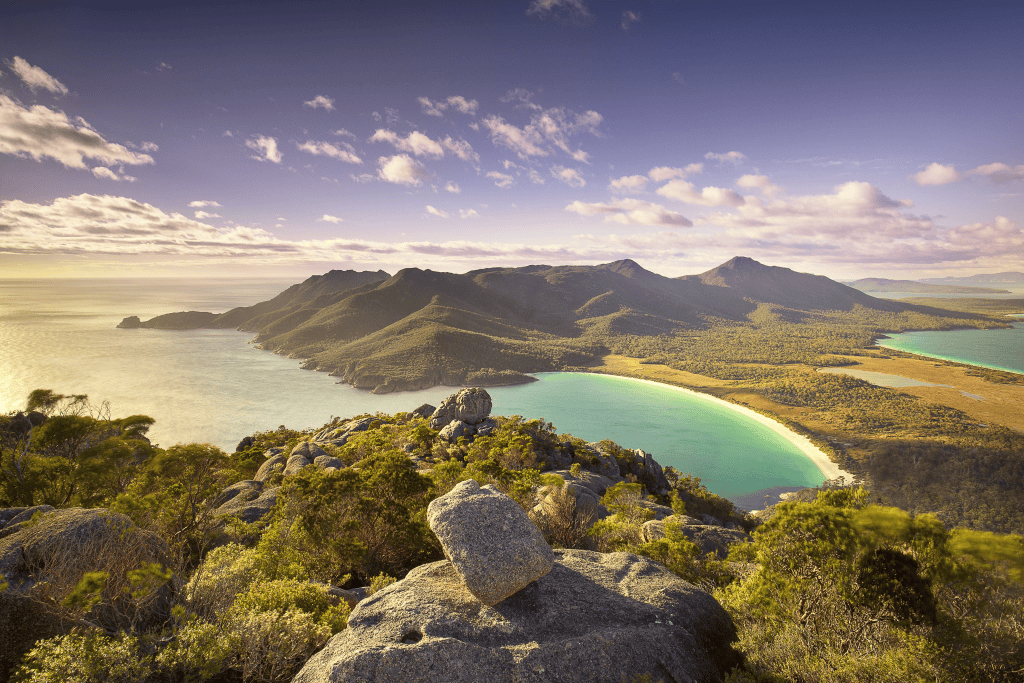
While Australia’s East Coast hubs such as Sydney, Melbourne, and the Gold Coast struggle under the weight of peak holiday tourism, the island state of Tasmania offers temperate wilderness, open rural highways, and a peaceful coastline.
- Why the Location is Known for Winter: December brings early summer to Tasmania, delivering the region’s best weather of the year. Daytime temperatures sit in a comfortable 65°F to 72°F range, creating ideal hiking conditions without mainland Australia’s extreme summer heat waves. Summer also brings the blooming of expansive purple lavender fields across the north and extended daylight hours for coastal exploration.
- What to Do While You’re There: Hike through the glacial valleys and alpine moorlands of Cradle Mountain-Lake St Clair National Park, looking out for wild wombats and wallabies along the boardwalk trails. Explore the dramatic sea cliffs and convict history of the Tasman Peninsula, drive up to the pristine white sands and orange, lichen-encrusted granite boulders of the Bay of Fires, and sample world-class oysters and cool-climate Pinot Noir along the Tamar Valley.
- Keep in Mind… Tasmania’s weather is notoriously changeable due to its position in the Southern Ocean. You can easily experience warm sunshine, rain, and cold winds within a single afternoon. Pack technical layers, book rental vehicles well in advance due to island-wide fleet limits, and allow ample driving time along winding rural roads.
Plan Your Uncrowded Winter Escape
No matter what your preferences, a truly rewarding holiday break often comes down to finding a respite from the crowds. One of the great things about each of these destinations is their proximity to the popular spots. Still want to prioritize checking Cape Town off your bucket list? Great! Then hop over to the Drakensberg to catch your breath and rediscover your personal space. However, because these regions sit outside mainstream mass-tourism circuits, finding the best accommodations requires thoughtful, knowledgeable coordination. Reach out to start designing your perfect winter vacation.


Leave a Reply